Slope engineering in Dundee encompasses the analysis, design, and management of natural and man-made inclines to ensure stability and prevent failure. This category is critical due to the city's distinctive topography, characterised by the Dundee Law volcanic sill and steep river valleys carved into glacial deposits. From the waterfront regeneration along the River Tay to residential developments on the city's hillsides, understanding slope behaviour directly influences public safety, infrastructure resilience, and long-term development viability. Comprehensive slope assessment integrates soil erosion analysis with structural solutions to address both gradual degradation and sudden instability, making it an essential consideration for any project involving changes to ground profiles.
Dundee's geological setting presents unique challenges for slope stability. The area is underlain by Devonian Old Red Sandstone, capped in places by the more resistant dolerite of the Law, but much of the city sits on Quaternary glacial till, sands, and gravels. These superficial deposits can be highly variable, often comprising loose, water-bearing layers interbedded with cohesive clays. The region's post-glacial history has left steep-sided denes and raised beach deposits that are prone to softening when saturated. Combined with a temperate maritime climate that delivers regular rainfall throughout the year, elevated pore-water pressures are a recurring trigger for shallow translational slides and soil erosion. A rigorous slope stability analysis must therefore account for these local ground conditions, particularly where natural drainage patterns have been altered by urbanisation.
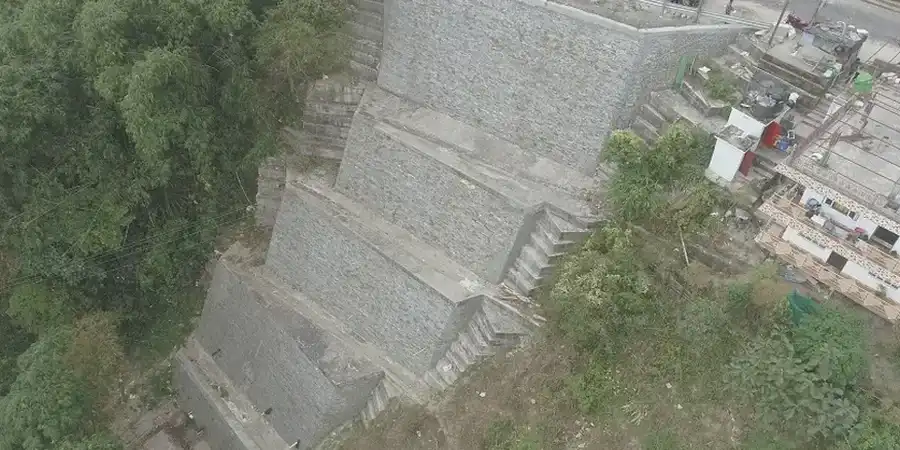
The regulatory framework governing slope works in Dundee aligns with UK national standards, primarily Eurocode 7 (BS EN 1997-1 and -2) for geotechnical design, supplemented by the UK National Annex. BS 8002:2015 provides specific guidance for earth retaining structures, while BS 6031:2009 remains a key reference for earthworks. For projects in Scotland, compliance with the Building (Scotland) Regulations 2004 is mandatory, and Planning Advice Note 69 (PAN 69) on planning and building standards advice on flooding can be relevant where slope instability impacts drainage. A fundamental requirement across these codes is the demonstration of an adequate factor of safety (FS) calculation, typically targeting values between 1.3 and 1.5 for permanent works depending on the consequence of failure, verified through limit state analysis.
A wide spectrum of projects in Dundee requires professional slope engineering input. Infrastructure works, such as the A90 Kingsway cuttings and railway corridors, necessitate ongoing monitoring and remediation to prevent disruption. Hillside housing developments, particularly in areas like Balgay and Lochee, demand careful cut-and-fill analysis and often incorporate retaining wall design to maximise usable land while safeguarding adjacent properties. Waterfront and dockland regeneration schemes frequently rely on embedded retaining solutions, where sheet pile wall design proves effective in the alluvial soils near the Tay. Additionally, the assessment of natural hazards through landslide assessment is increasingly vital as climate change intensifies rainfall patterns, directly informing land-use planning decisions and emergency preparedness strategies for Dundee City Council.
Quick answers
What are the most common signs of slope instability that property owners in Dundee should look for?
Property owners should watch for fresh cracks in ground or paving, tilting trees or fence posts, bulging at the base of a slope, and sudden changes in drainage patterns. Inside buildings, sticking doors or windows and new plaster cracks can indicate ground movement. In Dundee's glacial clay soils, these signs often appear after prolonged wet weather when pore-water pressures increase.
How do local ground conditions in Dundee influence the choice of slope stabilisation method?
Dundee's variable glacial till and raised beach deposits demand tailored solutions. Cohesive soils may suit drainage improvements and regrading, while granular layers often require retaining structures. The presence of groundwater is a decisive factor; techniques like soil nailing work well in the stiffer tills, but loose saturated sands near the river may necessitate sheet pile walls or diaphragm walls to control seepage and maintain stability.
What regulations must be followed for slope engineering works in Scotland?
Slope works must comply with Eurocode 7 (BS EN 1997) and the UK National Annex, alongside BS 8002:2015 for retaining structures. The Building (Scotland) Regulations 2004 apply to works near buildings, and planning consent may require a geotechnical assessment. For larger earthworks, BS 6031:2009 provides guidance, while PAN 69 can influence designs where slope failure might exacerbate flood risk.
When is a landslide assessment required for a development site in Dundee?
A landslide assessment is typically required when a site is on or adjacent to a slope steeper than 15 degrees, in an area with known historical instability, or where development may alter drainage or loading conditions. Dundee City Council may request one through the planning process, particularly for sites near the Law or within the steep-sided denes, to ensure risks are properly characterised and mitigated.