Road geotechnics in Dundee addresses the engineering behaviour of the ground beneath and adjacent to the city's transport corridors, forming the critical interface between pavement structures and the natural terrain. This discipline encompasses site investigation, earthworks design, slope stability assessment, pavement foundation evaluation, and drainage management, all tailored to ensure that roads perform safely and durably under local conditions. In a city undergoing significant regeneration—including the Dundee Waterfront redevelopment and upgrades to the A90 and A92 corridors—the demand for rigorous geotechnical input has never been higher. Without it, projects risk premature rutting, cracking, or even catastrophic slope failures that disrupt connectivity and impose heavy maintenance burdens on Dundee City Council and Transport Scotland.
Dundee's geology presents a complex and varied profile that directly influences road construction and long-term performance. The city is largely underlain by Devonian Old Red Sandstone, with the Dundee Formation comprising interbedded sandstones, siltstones, and mudstones. Overlying these are glacial tills, raised beach deposits, and pockets of soft alluvium along the Firth of Tay shoreline. The northern and western fringes encounter weathered volcanic rocks of the Sidlaw Hills. Each material behaves differently under load: the stiff glacial tills generally offer good bearing capacity, but the soft estuarine clays and silts near the waterfront can undergo significant consolidation settlement. Understanding this ground variability is essential when planning road alignments, junctions, and embankments, and a thorough CBR study for road design is often the starting point for pavement thickness calculations.
Geotechnical design for roads in Scotland must comply with the UK National Annexes to Eurocode 7 (BS EN 1997-1 and BS EN 1997-2), together with the Design Manual for Roads and Bridges (DMRB), particularly CD 622 (Managing Geotechnical Risk) and CD 225 (Design of Earthworks). Transport Scotland's standards and the Specification for Highway Works (SHW) Series 600 govern earthworks execution. For projects within Dundee's administrative boundary, the local authority may also require compliance with its own planning conditions and the Scottish Planning Policy framework. These documents mandate staged investigation, appropriate ground models, and verification testing—including California Bearing Ratio assessments—to confirm that subgrade and capping layers meet specified performance criteria before pavement construction commences.
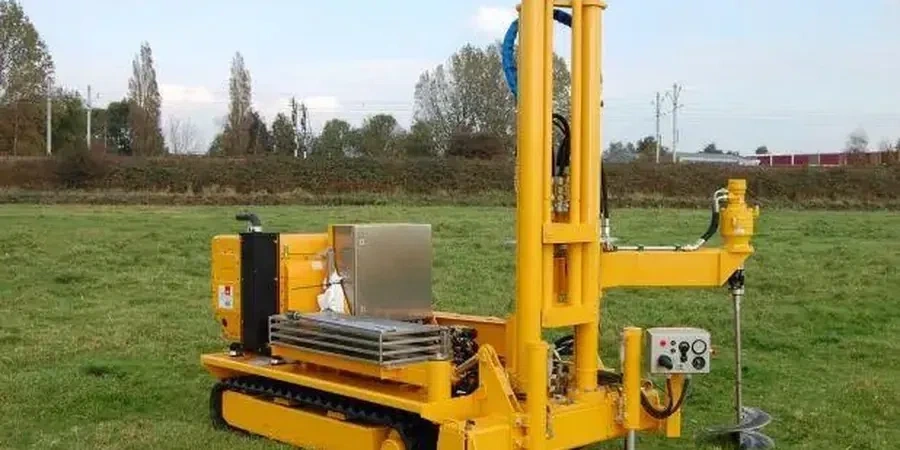
The types of projects requiring road geotechnics activities in Dundee range from major trunk road improvements, such as the ongoing A90 Kingsway junction upgrades, to residential estate roads, industrial access routes, and active travel corridors. Earthworks for new link roads, remediation of slipped embankments along the Dighty Burn, and foundation design for retaining walls and bridge abutments all fall within this category. Even resurfacing schemes benefit from a CBR study for road design to diagnose subgrade-related failures. Each project demands a tailored investigation, often combining trial pitting, dynamic probing, and laboratory testing to build a reliable ground model that informs cut-and-fill balance, drainage strategy, and pavement specification.
Available services
Quick answers
What are the main geotechnical risks when building roads in Dundee?
Key risks include settlement of soft alluvial soils along the Tay estuary, slope instability in glacial till cuttings, and volume changes in weathered mudstone subgrades. High groundwater levels can weaken pavement foundations, while abandoned mine workings in sandstone areas pose collapse hazards. A phased site investigation addressing these factors is essential under CD 622 of the DMRB.
Which British Standards apply to road earthworks in Dundee?
Earthworks design follows BS EN 1997-1 and BS EN 1997-2 (Eurocode 7) with the UK National Annexes. Execution is governed by the Specification for Highway Works Series 600, while the DMRB documents CD 622 and CD 225 offer overarching risk management and design guidance. Transport Scotland supplements these with project-specific requirements for trunk roads.
How deep should a site investigation go for a typical road project in Dundee?
Investigation depth depends on the proposed earthworks and ground conditions, but generally extends at least 2 to 3 metres below finished formation for standard pavements, or deeper where embankments, cuttings, or soft ground are encountered. Boreholes and trial pits should penetrate through made ground and alluvium into competent natural strata to allow settlement and bearing capacity analysis.
What is the role of a CBR test in Dundee road projects?
The California Bearing Ratio test measures the strength of subgrade and capping materials, directly informing pavement thickness design according to DMRB CD 225. In Dundee, where subgrade conditions can vary sharply between stiff till and soft clay, CBR data ensures each road section receives an appropriate, cost-effective pavement build-up that resists deformation under traffic.