A seven-storey student accommodation block near the University of Dundee required a 9-metre-deep basement excavation directly adjacent to a sandstone retaining wall. The contractor needed real-time data on wall deflection and groundwater levels to prevent damage to neighbouring 19th-century tenements. We deployed inclinometers, piezometers, and precise levelling points to monitor every phase of the dig. This kind of geotechnical excavation monitoring in Dundee is essential where the city's variable glacial till overlies fractured Old Red Sandstone, creating both stability and seepage challenges. The system provided early warning of any movement, allowing the team to adjust shoring sequences before issues escalated.
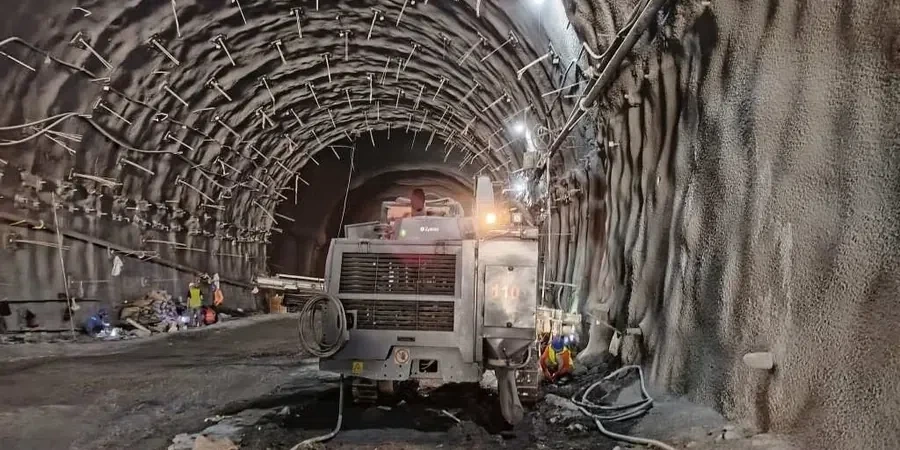
Continuous monitoring of wall deflection and groundwater pressure during deep excavations in Dundee's variable glacial till and sandstone reduces the risk of adjacent property damage by over 60%.
Process overview
Local context
A common mistake we see in Dundee is relying solely on visual inspection of excavation walls without installing any instrumentation. The city's mixed geology can hide a weak layer of laminated clay or a water-filled fissure in the sandstone that only becomes obvious when a section of the shoring starts to bow. By that point, remedial work is expensive and disruptive. Proper geotechnical excavation monitoring in Dundee catches these issues when they are millimetres of movement, not centimetres. Installing inclinometers and piezometers before the first bucket of soil is removed gives the design team a baseline and a clear threshold for action. Waiting until a crack appears in the adjacent pavement is too late for a cost-effective fix.
Reference standards
BS 5930:2015 (Code of practice for ground investigations), BS EN 1997-1:2004 + A1:2013 (Eurocode 7 – Geotechnical design), BS EN 1997-2:2007 (Eurocode 7 – Ground investigation and testing), CIRIA C760 (Guidance on embedded retaining walls)
Additional services
Inclinometer surveys for wall deflection
Installation of inclinometer casings within diaphragm walls or secant pile walls, with baseline readings and periodic surveys to track lateral movement over time.
Piezometer networks for pore pressure
Vibrating wire piezometers placed at multiple depths to monitor groundwater response during dewatering and excavation, with telemetry for remote access.
Precise levelling and settlement points
Arrays of survey targets on structures and ground surface, monitored with digital levels to detect differential settlement as low as 0.5 mm.
Automated data management and alarms
Cloud-based platform that aggregates all instrument readings, generates trend plots, and sends SMS alerts when predefined thresholds are exceeded.
This service complements our laboratory testing work for a complete project analysis.
Typical parameters
Quick answers
What does geotechnical excavation monitoring involve on a typical Dundee site?
It involves installing instruments such as inclinometers, piezometers, and survey targets around the excavation perimeter, taking baseline readings, and then collecting data at regular intervals during the dig. The data is compared against trigger levels set by the design engineer to confirm the excavation is behaving as predicted. In Dundee, where the ground can shift from soft clay to hard sandstone within a few metres, this continuous feedback is critical for safety.
How much does geotechnical excavation monitoring cost in Dundee?
For a typical basement excavation in Dundee, the cost for a full monitoring programme including instrumentation, installation, and regular reporting ranges between £610 and £2.150, depending on the depth of excavation, number of instruments, and duration of monitoring. Complex sites with multiple sensors and automated logging fall at the higher end of that range.
Can monitoring prevent damage to neighbouring buildings in Dundee city centre?
Yes, it is the primary tool for preventing damage. By tracking wall deflection and ground settlement in real time, monitoring allows the contractor to stop work or modify the excavation sequence if movement approaches a pre-agreed limit. In Dundee's tight urban streets, where historic buildings often sit close to the site boundary, this early warning system is the difference between a controlled dig and a costly insurance claim.