Foundation engineering in Dundee demands a rigorous understanding of local ground conditions, where glacial history has left a complex legacy of deposits across the city. From the dense boulder clays of the Law area to the alluvial silts and sands along the Tay Estuary, the bearing capacity of near-surface soils can vary dramatically over short distances. A comprehensive bearing capacity analysis is therefore not just a design step but a fundamental necessity, ensuring that structural loads are safely transferred to competent strata without excessive settlement or risk of bearing failure.
Dundee's geological setting is dominated by Quaternary deposits overlying Devonian Old Red Sandstone bedrock. The glacial till, often stiff to very stiff with cobbles and boulders, provides excellent founding conditions for shallow foundation design in many inland areas. However, post-glacial raised beach deposits and estuarine silts near the waterfront and former docklands present low-strength, compressible materials that demand deeper solutions. The presence of soft clays and loose sands necessitates careful evaluation of both total and differential settlement, particularly for residential and commercial developments on brownfield sites where historical fill adds further uncertainty.
All foundation works in Dundee must comply with the relevant British Standards and Eurocodes, specifically Eurocode 7 (BS EN 1997) for geotechnical design, along with the UK National Annexes. The Scottish Building Standards Technical Handbooks, which reference BS 8004 for foundations and BS 5930 for site investigation, set the regulatory framework for safe and serviceable construction. Compliance with NHBC Standards is mandatory for new homes, requiring thorough ground investigation and foundation design justification. Local authority building control in Dundee City Council will expect site-specific geotechnical reports that demonstrate how the chosen foundation system addresses the identified ground risks, including potential for frost heave and chemical attack on concrete in made ground.
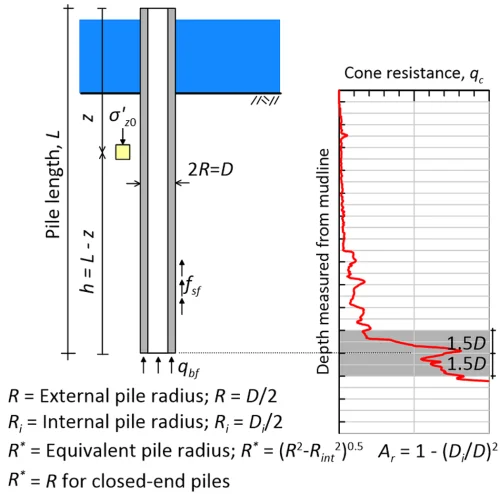
The range of projects requiring specialist foundation input in Dundee is broad, from the sensitive underpinning of historic tenement buildings in the West End to large-scale waterfront regeneration schemes. Industrial developments along the Kingsway and technology parks demand foundations for heavily loaded structures and vibration-sensitive equipment. Driven pile design is frequently adopted for structures over weak alluvial deposits, transferring loads to the rockhead which can be at significant depth. For sites underlain by the region's potentially expansive glacial clays, an expansive soil evaluation becomes critical to prevent seasonal moisture-driven heave and shrinkage that can damage lightly loaded foundations and ground-bearing slabs.
Quick answers
What are the most common foundation challenges encountered in Dundee?
The primary challenges stem from variable glacial deposits, including soft estuarine silts and clays near the Tay, which offer low bearing capacity and high settlement potential. Inland, stiff boulder clays can be excellent founding strata but may contain obstructions. Made ground on former industrial sites and the potential for expansive clay behaviour in drier periods also require specific design measures to ensure long-term foundation performance.
How do UK building regulations affect foundation design in Dundee?
Foundation design must comply with Eurocode 7 (BS EN 1997) and its UK National Annex, alongside BS 8004. The Scottish Building Standards Technical Handbooks enforce these through the warrant process. For residential work, NHBC Standards apply, mandating a thorough ground investigation and a design that demonstrates adequate safety against bearing failure and excessive settlement under all serviceability conditions.
When is a deep foundation necessary rather than a shallow foundation in the Dundee area?
Deep foundations, typically driven or bored piles, become necessary when competent bearing strata are too deep for economic shallow excavations, or when near-surface soils are weak, highly compressible, or subject to scour. This is common along the waterfront, in areas of deep alluvial deposits, and where structural loads are very high, requiring load transfer to the underlying sandstone bedrock.
What is the importance of a site-specific ground investigation before designing foundations in Dundee?
A detailed ground investigation to BS 5930 is essential to characterise the highly variable local geology, from glacial till to estuarine deposits. It defines the engineering properties, groundwater conditions, and any contamination present. Without this data, assumptions about bearing capacity and settlement are unreliable, leading to either unsafe or uneconomical foundation designs that fail to meet Building Standards requirements.