In Dundee, the Tay floodplain and former glacial basins create a challenging mix of peat, alluvial silts, and soft clays. Many sites we assess here require more than a standard bearing capacity check — the organic content can be deep and variable. A proper organic soil management plan starts with understanding the stratigraphy. That is why before any foundation design we recommend a detailed calicatas-exploratorias programme to map peat lenses and soft layers. Without that initial ground model, you risk differential settlement and long-term creep. The city's industrial heritage also means some areas have made ground over soft organics, adding another variable to the profile.
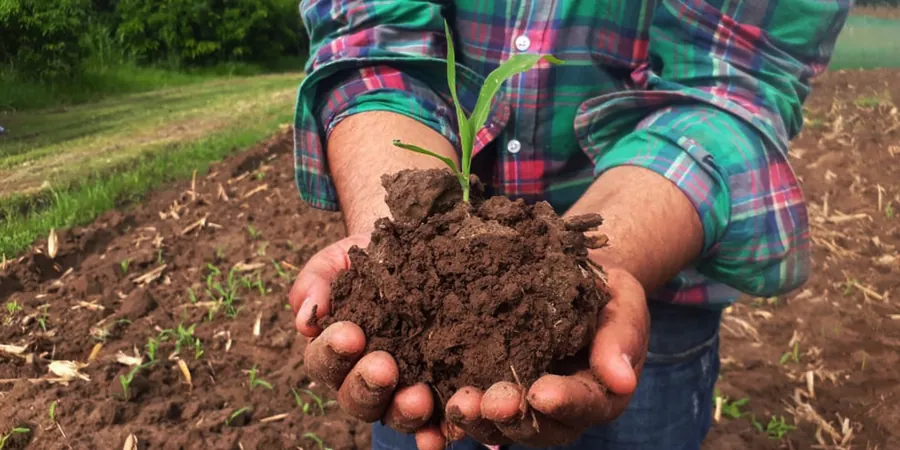
Peat and alluvial soils in Dundee can lose 30–50% of their volume under load. Organic soil management must account for long-term creep beyond primary settlement.
Process overview
- Organic content by loss on ignition (BS 1377-3)
- Undrained shear strength of peat (lab vane or triaxial)
- Compression index Cc for creep prediction
- Permeability in the organic horizon
- Fibre content and degree of humification (von Post scale)
Local context
The risk profile in Dundee varies sharply between the city centre and the outlying greenfield sites. In the centre, where buildings sit on dense glacial till, organic soil management is rarely a concern. But move to the Invergowrie side or along the Dighty Water, and you can find 6 metres of soft organic silt and peat. The main hazard is uncontrolled differential settlement — one part of a slab sinking twice as fast as another. We also see lateral creep in peat when slopes are cut without adequate stabilisation. A common oversight is treating organic soil as just 'soft ground' without measuring its specific compression behaviour. That leads to under-designed foundations and expensive retrofits.
Reference standards
BS 5930:2015 (Code of practice for ground investigations), BS EN 1997-2:2007 (Eurocode 7 – Ground investigation and testing), BS 1377-3:2018 (Methods of test for soils – chemical and organic content tests), FHWA NHI-05-037 (Design and construction of embankments on soft ground)
Additional services
Peat and Organic Soil Profiling
Detailed stratigraphic logging of peat, alluvium, and organic clay layers using trial pits, CPT, and boreholes. Includes von Post humification classification and loss-on-ignition testing to BS 1377.
Settlement and Creep Analysis
Laboratory oedometer tests on undisturbed samples to determine Cc, Cs, and secondary compression index (Cα). Predicts long-term creep in Dundee's peat deposits for foundation and embankment design.
Improvement Design
Recommendations for excavation and replacement, preloading, vertical drains, or lightweight fill. We evaluate cost-benefit for each Dundee site based on organic content depth and project loads.
Typical parameters
Quick answers
Why is organic soil management critical for construction on the Tay floodplain?
The Tay floodplain contains compressible peat and alluvial silts up to 8 metres thick. Without proper management, structures knowledge excessive differential settlement and long-term creep that can exceed 300 mm over 10 years. A phased investigation program is essential.
How much does an organic soil management study cost for a typical Dundee residential plot?
For a standard residential plot (0.2–0.5 hectares) with trial pits, sampling, and laboratory testing, the cost typically ranges between £600 and £2,260. Larger developments or sites requiring deep boreholes and settlement analysis fall at the higher end.
What is the difference between peat and organic clay in terms of foundation design?
Peat has a fibrous structure, extremely high moisture content (often over 300%), and compresses rapidly under load with significant secondary creep. Organic clay has lower organic content (5–20%), higher shear strength, and behaves more like a soft clay. Foundation design for peat usually requires Improvement or deep piles, while organic clay may only need a thicker raft or preloading.