A former quarry near the Tay estuary was lined for a new landfill cell. The glacial till and raised marine deposits needed full characterisation before any waste could be placed. We ran boreholes, installed standpipes, and performed [infiltracion](infiltracion) tests to measure the natural clay permeability. The client needed a solid barrier design. Dundee's variable drift geology means no two cells behave the same. Our landfill geotechnics approach covers every layer from the liner base to the final cap.
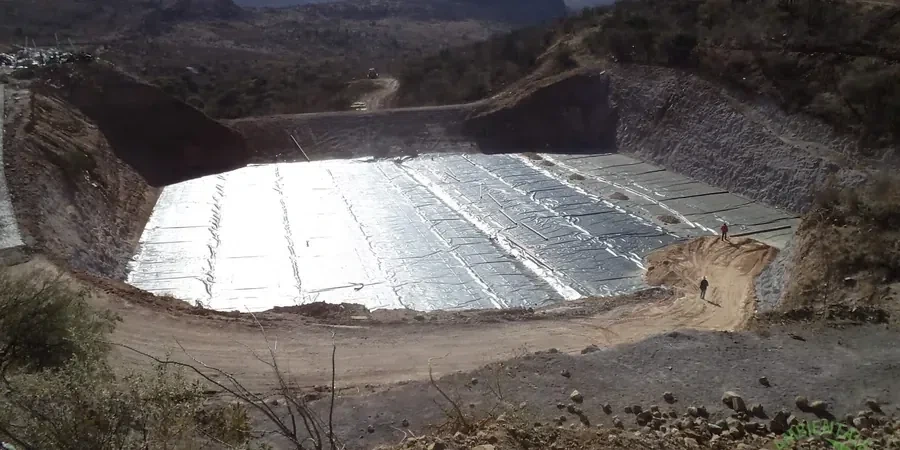
Dundee's glacial till contains sand lenses that can increase permeability tenfold. We map them metre by metre.
Process overview
- In-situ falling head tests in boreholes
- Triaxial permeability on undisturbed samples
- Compaction curves for engineered clay liners
- Gas monitoring well installation
Local context
We see it often in Dundee: a liner placed on glacial till without verifying the in-situ permeability. A single gravelly lens can become a conduit for leachate. The regulatory body will require proof of barrier equivalence. Our landfill geotechnics identifies these risks before construction. We also check for shallow groundwater that could cause uplift on an empty cell. Dundee's high winter rainfall makes this a real threat. Early detection saves costly remedial work.
Reference standards
BS EN 1997-1:2004 (Eurocode 7 – Geotechnical design), BS 5930:2015 (Code of practice for ground investigations), EA NEPG 6 (Landfill liners and capping systems), BS 1377-5 (Hydraulic conductivity of saturated porous materials)
Additional services
Liner and Cap Characterisation
Field and lab tests to prove the natural clay barrier meets the 1×10⁻⁹ m/s target. Includes compaction control, triaxial permeability, and interface shear testing for geomembrane/clay contacts.
Slope Stability and Settlement Analysis
Limit equilibrium and finite element models for waste slopes and basal liners. We account for Dundee's soft estuarine deposits and rising groundwater. Outputs include factor-of-safety charts and settlement contours.
Typical parameters
Quick answers
What is landfill geotechnics and why is it needed in Dundee?
It covers the ground investigation, design, and testing for landfill liners, caps, and waste slopes. In Dundee, the mixed glacial and estuarine deposits make it essential to prove low permeability and adequate bearing capacity before the regulator issues a permit.
How much does a landfill geotechnics study cost in Dundee?
Typical costs range from £1,760 to £7,060 depending on the number of boreholes, lab tests, and modelling required. A small cell with existing data may be at the lower end; a new site with deep boreholes and complex geology is at the upper end.
What tests are included in a landfill geotechnics investigation?
Common tests are falling head permeability in boreholes, triaxial permeability on intact samples, compaction curves for liner clay, Atterberg limits, and gas monitoring. We also run direct shear on interface samples if a geomembrane is planned.
How long does a landfill geotechnics investigation take?
A standard programme for a medium-size cell takes 4 to 8 weeks. This includes site work, lab testing, and a interpretative report. Dundee's weather can delay drilling in winter, so we plan for that.