In Dundee, the ground can change drastically within a single street. Glacial till dominates much of the city, but alluvial deposits along the Tay estuary create softer zones. Ignoring this variability leads to differential settlement. That is why proper shallow foundation design in Dundee starts with a detailed site investigation. We correlate soil type, groundwater depth, and bearing capacity before recommending a foundation solution. A common first step is a trial pit investigation to classify the soil profile visually and collect undisturbed samples for lab testing. This approach saves time and avoids surprises during excavation.
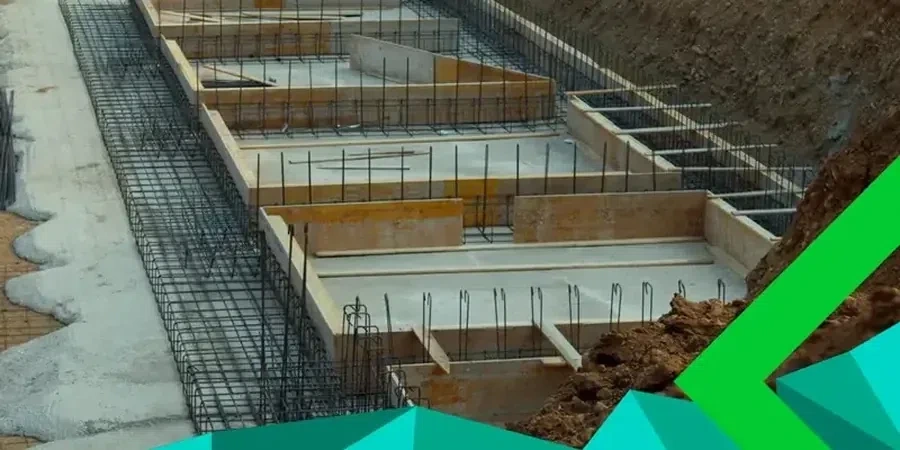
Glacial till in Dundee often exceeds 200 kN/m² bearing capacity, but estuarine clays can drop below 80 kN/m². Design accordingly.
Process overview
Local context
Dundee's climate is wet and cool. Annual rainfall averages 700 mm. That keeps the water table high in many areas, especially near the Tay. A high water table reduces effective stress in shallow soils. It also increases the risk of frost heave in winter. These conditions demand careful drainage design and a solid foundation solution. Shallow foundation design in Dundee must include a groundwater assessment. If not, you risk long-term settlement or heave. For sites with shallow clays, we often recommend a reinforced raft foundation to spread loads evenly and resist movement.
Reference standards
Eurocode 7 (BS EN 1997-1:2004), BS 5930:2015 – Code of practice for ground investigations, BS 8004:2015 – Code of practice for foundations
Additional services
Site Investigation & Soil Classification
We drill trial pits and boreholes, classify soils using BS 5930, and test index properties. This defines the ground model for foundation design.
Bearing Capacity Analysis
Using Eurocode 7 methods, we calculate allowable bearing capacity for strip footings, pad foundations, and rafts. We account for groundwater and layering.
Settlement Prediction
We perform oedometer tests and estimate immediate and consolidation settlement. We compare results against your structural tolerance limits.
Foundation Type Recommendation
Based on soil data and load requirements, we recommend the most economical shallow foundation type: strip, pad, raft, or wide-slab.
Typical parameters
Quick answers
What soil conditions in Dundee affect shallow foundation design?
Glacial till is common and provides good bearing capacity, but estuarine clays near the Tay are soft and compressible. Groundwater is often high, which reduces effective stress. A site investigation is essential to map these variations.
How much does a shallow foundation design study cost in Dundee?
A full geotechnical study for shallow foundations in Dundee typically ranges from £1,610 to £2,490. This includes site investigation, lab testing, and a design report. Final cost depends on site access, depth of investigation, and number of boreholes.
What is the difference between a pad foundation and a raft foundation?
A pad foundation supports a single column load on isolated concrete pads. A raft foundation is a continuous slab that spreads the load over the entire footprint. Rafts are better for soft soils or high water tables because they reduce differential settlement.
Do I need a plate load test for shallow foundation design?
It is not always mandatory, but it is highly recommended for variable soils like Dundee's estuarine clays. A plate load test validates the bearing capacity assumed in design. It provides real data instead of relying solely on correlations.